




Description
SKG Shooter Framework V2 is on Engine Versions 5.3+. Ultimate FPS Framework is on previous engine versions.
Last Updated: October 27, 2026
Current Published Version: V2.0.0
New in V2.0.0: a big update to optics, night vision, thermal, and more!
If you are looking for a robust, realistic and efficient ballistics system that pairs well with this plugin, I recommend checking out Terminal Ballistics
C++ is not required to use this plugin; however, I recommend that you at least have a basic understanding of blueprints to use this framework.
Example Content (V2) / Example Content (Old V1) / Playable Demo / Documentation(Written) / Documentation(Video) / Support Discord Server
What is this plugin:
This plugin is meant to be a simple, performant, modular, component based framework.
Performance:
Overview:
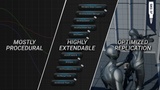
Performance was a huge focus with all the new systems. Unlike a few popular kits on the marketplace that use blueprint, run everything on the game thread, and/or use multicasts for nearly all replication, mine uses the push model for replication, uses worker threads where viable, and does not have the additional overhead of blueprint.
Multiplayer:
The system fully utilizes the push model to improve server performance over the default Unreal implementation. Potentially large arrays use the fast array serializer to reduce the data sent when they change, and where applicable variables are compressed into bytes before being sent. Each class comes with a bAutoCallForceNetUpdate option that forces a net update and flushes net dormancy when the server marks a variable dirty, so you can keep a very low NetUpdateFrequency and still have responsive replication.
Animation:
The animation system offloads much of the heavy lifting to worker threads so multiple pawns can process their animations in parallel. In the screenshot above, 45 animating pawns take 13.11ms on the game thread with the default third person template character and only 14.34ms with my system and every procedural running. That is before optimizations such as the Animation Budget Allocator, which works great with my system.
Procedurals:
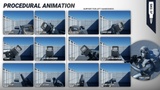
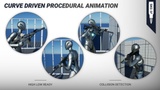
The provided procedural system is the most in depth on the marketplace. It makes full use of the mannequin's ik bones to allow full freedom with firearms, such as running the action of a bolt gun with your right hand and switching from right to left handed. The pose system allows unlimited poses such as high port, low port, short stock, blind fire, shoulder swapping and whatever else you want to make, as they are driven entirely by curves. Recoil (firearm and controller), firearm collision and movement sway are curve driven too. The rest are value and socket driven: aiming, point aiming, aiming at multiple points on a single sight (think of the Elcan optic with iron sights on top of the housing), offhand ik for both hands, movement lag, rotation lag, deadzone, base pose offset and third person aiming offset (left and right handed).
Firearm and Attachments:
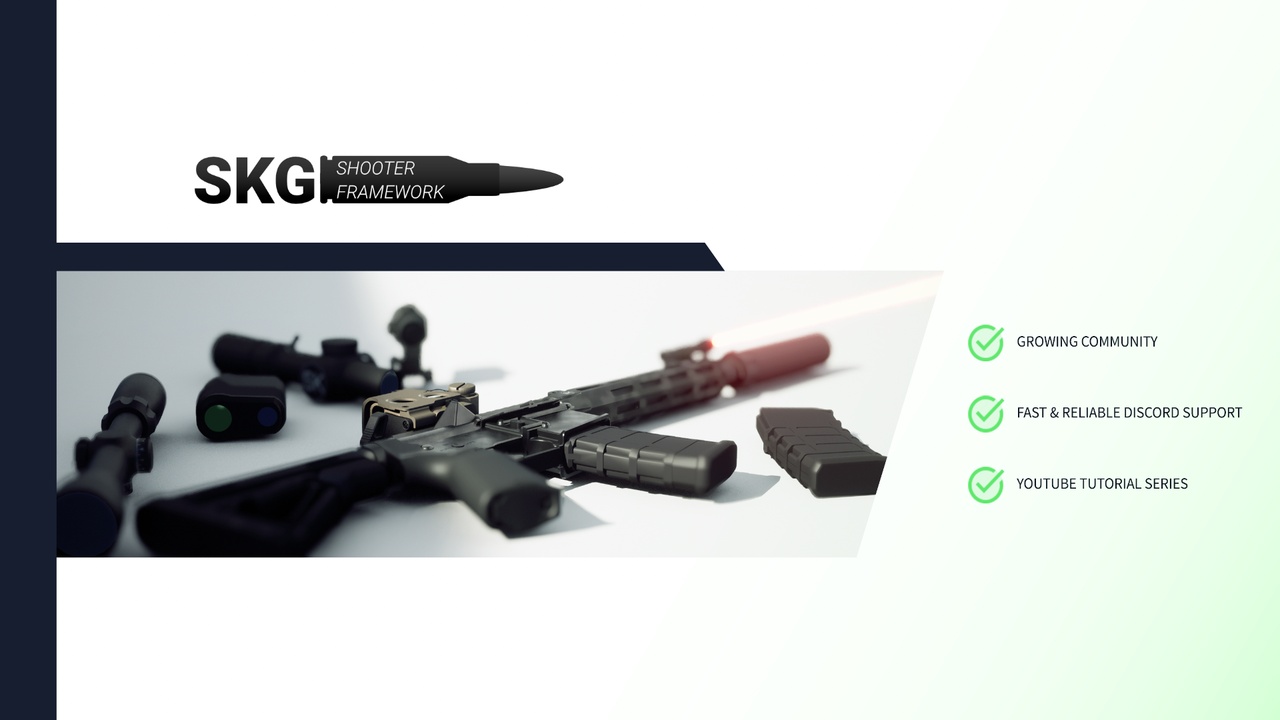
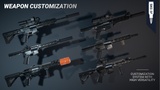
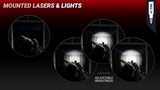
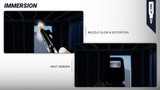
The firearm component acts as an interface to the rest of the attachments and holds the attachment manager, which gives direct access to each attachment and its parent component. The system comes with components to make nearly any firearm attachment, such as optics, magnified optics, lights, lasers, forward grips, muzzle devices, barrels and mounts. The example adds extra features such as a muzzle temperature system for Tarkov like suppressor smoke/heat with shimmer (see pictures).
Optics:
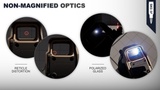
Red dots and holo sights have reticle distortion as the dot nears the edge of the window, and polarized glass that reflects lights and shifts tint with the viewing angle.
Magnified optics support two modes you can switch between at runtime: Picture in Picture, where the zoomed image is drawn in the scope, and Traditional, where the whole camera zooms. You get variable zoom that can be instant or smooth, first and second focal plane reticles, and zeroing in MRAD or MOA clicks. Enter the field of view, eye relief and objective lens size from a real scope's spec sheet and the optic gets a matching field stop and a simulated eye box. Lens effects include chromatic aberration, edge distortion and a reticle that bends with the lens.
With the SKGSF optimizations, Picture in Picture only renders the area the lens covers instead of the whole screen, and an optional setting shares some of the work with the player's own frame. In my testing in the example map, aiming went from 76 FPS (13.12 ms) with Unreal Engine's default scene capture component to 100 FPS (9.95 ms) with the SKGSF optimizations.
Infrared/Night vision:
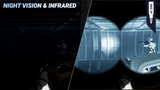
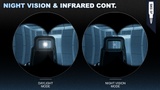
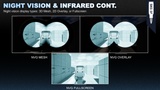
Lights and lasers can be infrared so they are only visible when you have night vision on. Night vision includes tube burn in from bright sources (a compute shader sampling the scene luminance) and three display types: a 3D mesh of the goggles, a 2D overlay, or fullscreen. A post process material is provided for a realistic look to control gain, SNR, and more.
Thermal:
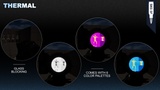
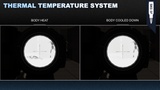
The thermal optic comes with 6 color palettes you can switch between at runtime. Glass blocks thermal like it does in real life, and a temperature system lets bodies and other hot objects cool down.
Attachment System:
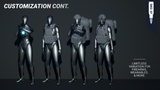
The attachment system is optional. It is universal, not just for firearms. Use it for anything that needs add-ons, such as a firearm with attachments or a character with clothing and kit (backpack, armor, etc.). It is fast and efficient, with full support for skeletal meshes and the leader pose component.
Bodycam:
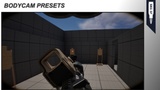
I've been asked how to do a bodycam style setup, so I added post process materials that let you mimic a bodycam style of game with just a few clicks.
There is a lot more than fits here, so check out the documentation and the example project.
Refund Policy:
I follow Fab's refund policy. If you are unsure about purchasing then please feel free to ask questions.
https://marketplacehelp.epicgames.com/s/article/What-is-the-Marketplace-refund-policy?language=en_US