

Açıklama
Documentation: wiki.teufel-engineering.com/en/MapWarden/documentation — the complete manual, readable in full before you buy: installation, API, settings, the demo map and a troubleshooting section.
Your content folder can be spotless while your level is a mess — two different questions. A linter asks whether an asset is named correctly. MapWarden asks what is actually standing in the map: how many of it there are, where it is, and what it is set to.
The failure this exists for
Somebody pressed Ctrl+D and did not move the copy. The duplicate is invisible in the viewport, because it stands exactly behind its twin. It costs memory, it costs a draw call, sometimes it costs you z-fighting that nobody can reproduce — and it stays in the level for the rest of the project.
The engine's own Map Check is a fixed short list, editor-only, with no thresholds, no exemptions and no return value a build server can read. Package builders and submission checkers on Fab check the package, not the contents of a level.
Seven checks, each one switchable, each one with its own threshold
A tool with one fixed opinion gets switched off on its first run against a real level, so none of this is hard-wired.
1. Duplicates. Two actors of the same class at practically the same place — under a centimetre apart, same rotation, same scale. All four conditions have to hold: two crates a millimetre apart and turned ninety degrees are a wall somebody built on purpose.
2. Collision missing where it was expected. A static mesh actor set to No Collision whose mesh does bring a collision model — somebody built that collision, and this placement throws it away. The reverse is deliberately not a finding: a mesh without any collision model is the mesh author's decision, not the placer's.
3. Mobility. Lights and meshes left on Movable that demonstrably never move: no movement component, no simulating body, not attached to anything movable, not referenced by a level sequence. Shadow work paid for and never used.
4. Out of bounds. The actor further from the centre of the level than the radius you set — the cube somebody lost while dragging. The centre is the average position of what was checked, not the world origin.
5. Silent triggers. Overlap volumes with nothing bound to their delegates and no reference from the level blueprint. This one is a warning and can never be an error, whatever you set it to, because a binding can be made at runtime from code this scan never loaded — and the report line says exactly that.
6. Dead references. Soft references on placed actors that no longer resolve to a package that exists.
7. Default names. More than N actors still called what their class called them. Off by default — how many StaticMeshActor_231 you can live with is taste, and taste does not belong in a gate unless you put it there.
The duplicate search is the fast one
Comparing every actor against every other one is quadratic — twenty thousand actors means two hundred million distance tests. MapWarden puts the actors on a uniform grid whose cell size is the duplicate tolerance, so each actor is only compared against its own cell and the twenty-six around it. One of the shipped automation tests runs the grid and a naive all-pairs comparison over five thousand actors and requires identical pairs — a fast search that quietly misses one is worse than a slow one.
The honest part: two things it cannot do
Both are on the report, not buried in a readme.
It cannot know what you meant. A crate with no collision may be decoration behind glass. So there are exemption lists by class, by outliner folder and by actor tag — and what was exempted is still counted and still shown as excluded by settings, with the finding still named. An exemption list that could hide its own effect would turn a level green from a settings page, which is what a gate exists to prevent. MapWarden.Exempt 0 shows the same level both ways in one keystroke.
It checks the map that is loaded. With World Partition, only the cells in memory exist. So the report names how many actors were checked and from which levels, and on a partitioned world it says in warning colour that unloaded cells were not checked. The JSON carries the same flag.
"Clean" must never be allowed to mean "nobody looked."
The report
Drawn on UCanvas from an AHUD, so it survives a cooked Shipping build.
MapWarden WARN | actors <count> checked in <level> | errors <n> warnings <n> info <n> | <n> excluded by settings | scan <n> ms
Then the findings, errors first, each naming the actor, what was measured and the threshold it broke, plus one plain sentence about what to do:
SM_Crate_2 and SM_Crate_1 are the same class in the same place with the same rotation and scale. One of them is invisible behind the other, and it still costs memory, a draw call and sometimes z-fighting. Delete one, or move it if the stack was deliberate.
When there is nothing to report it turns green and lists what it checked, switched-off checks in warning colour, so green is never mistaken for "never ran".
In the editor
Tools → MapWarden runs the same checks on the level that is open, with no game standing: Check This Level (headline as a toast, whole report in the Output Log), Select Everything With A Finding (every actor a finding is about, selected at once) and Write Level Report. Focus Finding selects an actor and moves the viewport camera to it, from Blueprint or from your own tooling.
One command on the build server
MapWarden.Gate writes Saved/MapWarden/report.json and ends the process with 0 when clean, 1 when there are only warnings and 2 when there is an error — the same three codes as AssetWarden, LocaleGuard, BindGuard, ReadGuard, WidgetLedger, LoadLens and HeapCensus. Eight tools, one convention.
A report that could not be written, or a gate that found no loaded level, exits 2. A gate that did not run must never look like a gate that passed.
MapWarden or AssetWarden?
AssetWarden checks the content folder — naming, location, references — including everything nobody has loaded. MapWarden checks the map: the same mesh can be flawless on disk and placed three times in exactly the same spot. Placement, transforms, mobility and overlap bindings only exist in a level. They do not overlap; run both.
Built to be trusted
The rules are static functions over plain structs — AreDuplicates, IsOutOfBounds, Judge, Explain — with no world, no subsystem and no actor behind them, which is why ten automation tests cover them and why you can call them from your own tooling. Among the tests: the grid against the naive comparison, and the one asserting a silent trigger can never be raised to an error.
Two modules, and the dependency arrow points one way only. The runtime never depends on the editor, which is why the gate runs in a commandlet and the report works in a packaged build.
What it is not
It does not move, delete or edit anything in your level, and it has no opinion about your naming conventions. It reports what is duplicated, mis-set, lost, unlistened-to and broken — with names and numbers — and it tells you what it did not look at.
What the screenshots show
Every number below is read off the demo level running on one machine. It is a measurement of that demo, not a promise about your project.
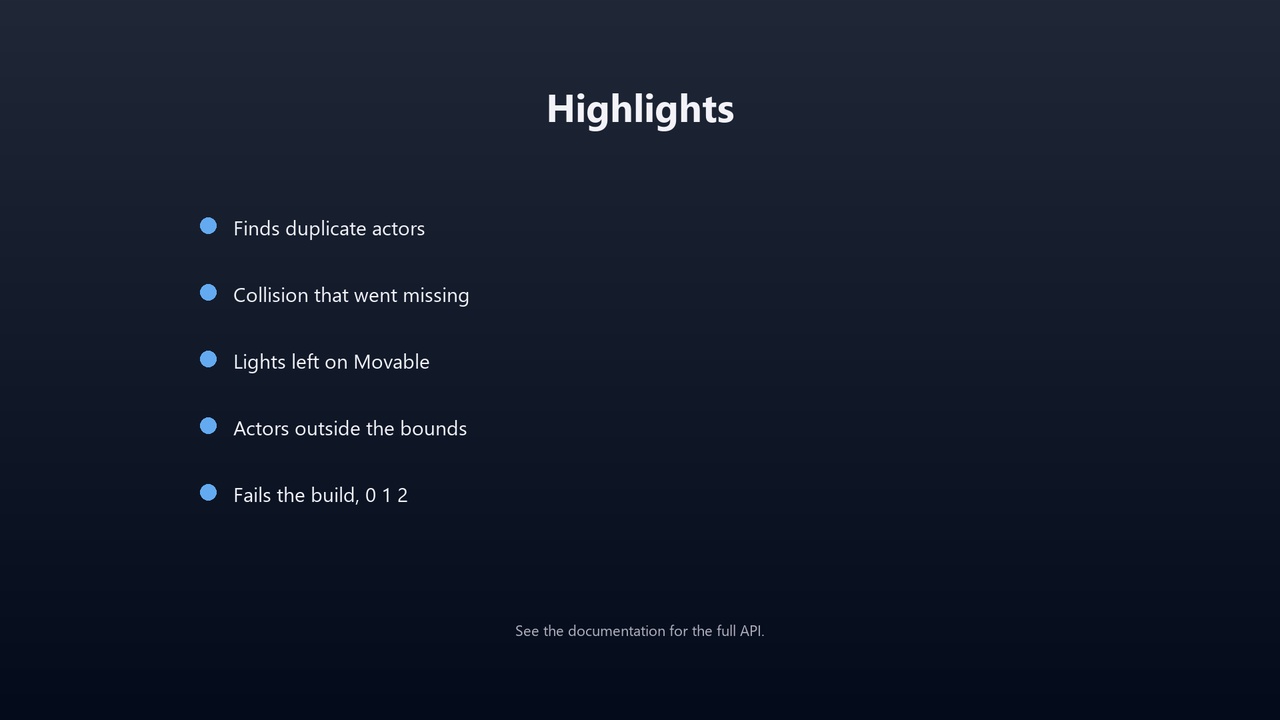
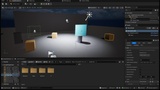
Level report — headline MapWarden FAIL | actors 28 checked in L_MapWardenDemo | errors 1 warnings 6 info 1 | 1 excluded by settings | scan 0 ms, and under it the coverage line: 28 actors checked in 1 level(s); 15 not checked. The one error: LostCube is 252,556 cm from the centre of the level (limit 100,000 cm).
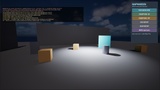
Exemptions off — the same level, one keystroke later: errors 1 warnings 7 info 0 | 0 excluded by settings. DecorCrate moves from the grey [excluded by settings] line up into the warnings. Nothing was hidden; it was only labelled.
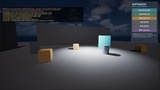
Gate report written — Wrote Saved/MapWarden/report.json — the same file MapWarden.Gate writes on a build server.
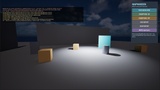
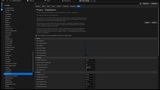
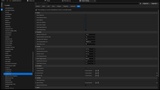
Editor: exempt by tag, Project settings, Exemptions and report — the same checks from the editor menu, and the thresholds where you set them.
Two duplicate pairs sit 0.00 cm apart at the same rotation and scale — the Ctrl+D nobody moved.