描述
AeroPlanet Volumetrics is a volumetric planetary cloud and atmosphere component with its own C++/HLSL raymarching render pipeline. It does not use Unreal's built-in Volumetric Cloud or Sky Atmosphere.
The clouds are a member of the scene rather than an effect painted over it: the march runs right after the base pass, so scene depth from your terrain is already correct there and other plugins are not double-drawn.
FEATURES
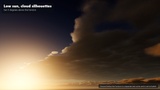
- Volumetric clouds raymarched in real time: low, middle, high and storm layers, built from a layered noise field rather than a flat texture painted across the sky.
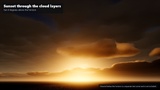
- Physically-grounded atmosphere with per-pixel Rayleigh and Mie scattering: the horizon reddens at sunset and the zenith stays blue because the sky colour comes from the sun's angle.
- Weather that varies by place: clear patches, overcast decks and storm cells sit side by side in the same sky.
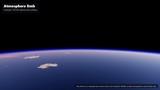
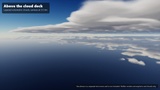
- One continuous cloud field from orbit to the ground and above the cloud tops. The same clouds, not swapped for another representation as you approach.
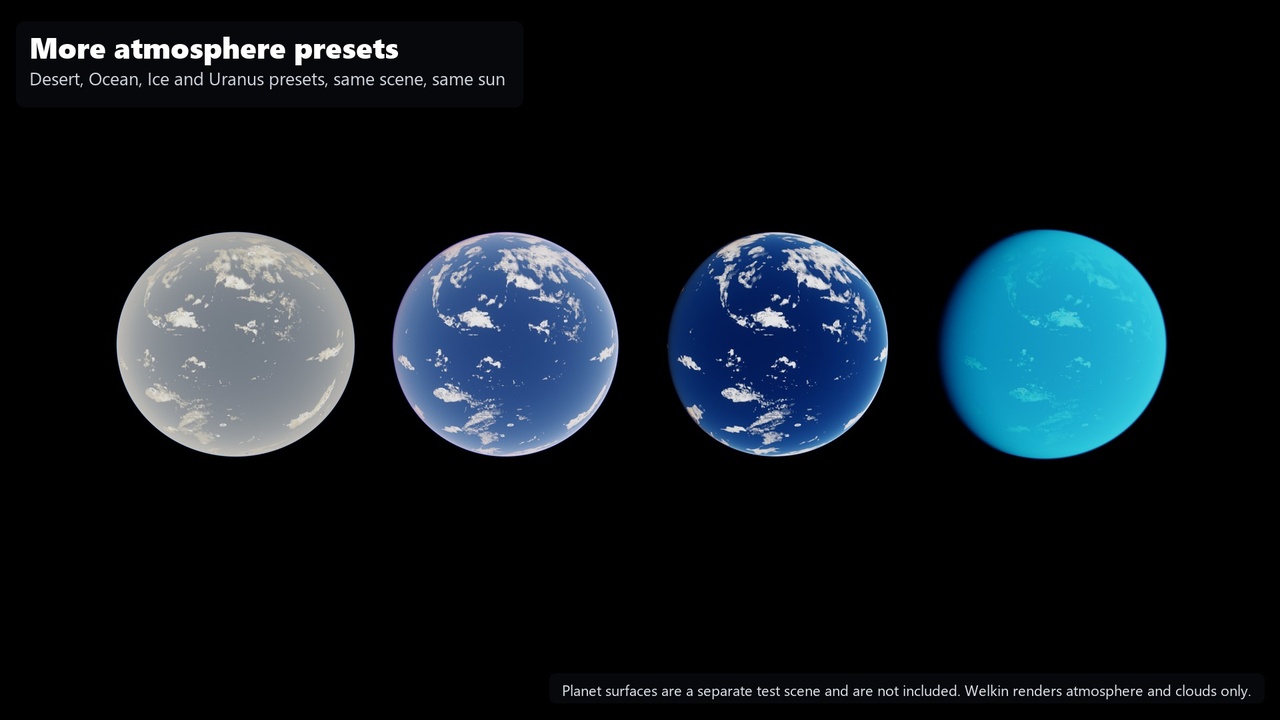
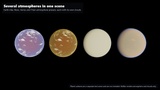
- Several planets, each with its own atmosphere, in one scene. Presets checked in the editor: Earth-like, Ocean, Desert, Ice, Mars, Venus, Titan and Uranus. Every coefficient stays editable after choosing a preset.
- Cloud source switch: "Current clouds" (plugin weather map and noise) or "NASA clouds" (a global cloud field built from NASA cloud imagery, included in the plugin).
- Place a star and give it orbiting bodies (planet, moon, station), nested if you like. Orbits are a function of time, not an integrator, so the same second always gives the same position.
- Editor helpers: "Create Test Sphere" (a plain test sphere with cloud shadow), "Apply Orbit Scatter Earth Preset", and an Auto Performance setting.
- Self-contained: drops into an empty UE project, writes no CVars to your project Config, and coexists with other terrain and atmosphere plugins in your scene.
PERFORMANCE - PLEASE READ
The cloud march costs in proportion to the number of pixels it fills.
Measured on an RTX 5060 Ti with an i7-14700F at 960x540 in UE 5.5: about 11 ms per frame in orbit and about 16 ms at ground level (Auto Performance on; about six times cheaper when the camera is still).
A viewport of about 3.5 million pixels costs roughly seven times more. A high-end GPU is recommended; a smaller viewport is lighter.
FIRST SHADER COMPILE
The first compile takes roughly 3 to 4 minutes and the editor can look frozen. It is not. At least 10 GB of free memory is recommended.
REQUIREMENTS
- Unreal Engine 5.5 or 5.8 (a separate download for each version), Windows 64-bit (the only platform tested)
- DirectX 12, Shader Model 5 GPU
- No other plugin is required.
WHAT IS INCLUDED
- The plugin: atmosphere and volumetric cloud rendering and editor tools.
- The plugin's own weather map data (about 70 MB) for the "Current clouds" option.
- NASA cloud data for the "NASA clouds" option (about 110 MB).
WHAT IS NOT INCLUDED
- No terrain, ground, sea, stars or planet meshes. The sea and ground in the screenshots are a separate test scene (apart from the small "Create Test Sphere" helper).
- No sample maps or art content.
KNOWN LIMITATIONS
- When a pole sits at the planet's edge, a streak of colour error can appear outside the edge while the camera moves.
- Cloud edges look grainy when viewed up close.
- Cost grows with pixel count. Not suited to low-end GPUs.
- Tested on Windows only. Screenshots and performance figures were made in UE 5.5.
- UE 5.8: the shaders compile and the same scenes render with the same clouds, atmosphere and NASA option. Overall brightness comes out about 10% lower than in 5.5 because of a difference in the engine's own post-processing (it also happens with the plugin switched off). It was checked in an empty test project, not in a full game.
CREDITS
Cloud data: NASA Visible Earth (Blue Marble: Clouds). Source: https://visibleearth.nasa.gov/images/57747/blue-marble-clouds
This product is not endorsed by, sponsored by or affiliated with NASA. The use of NASA imagery does not imply NASA's endorsement.
SUPPORT
Discord: https://discord.gg/CW4cqrszqD
Website: https://aeroplanet-volumetrics.pages.dev/
Email: [email protected]
old Video: https://www.youtube.com/watch?v=4hj4QF3322I