Descrição
Basic Information
- Period: 4th century BCE (late Classical era)
- Material: Marble
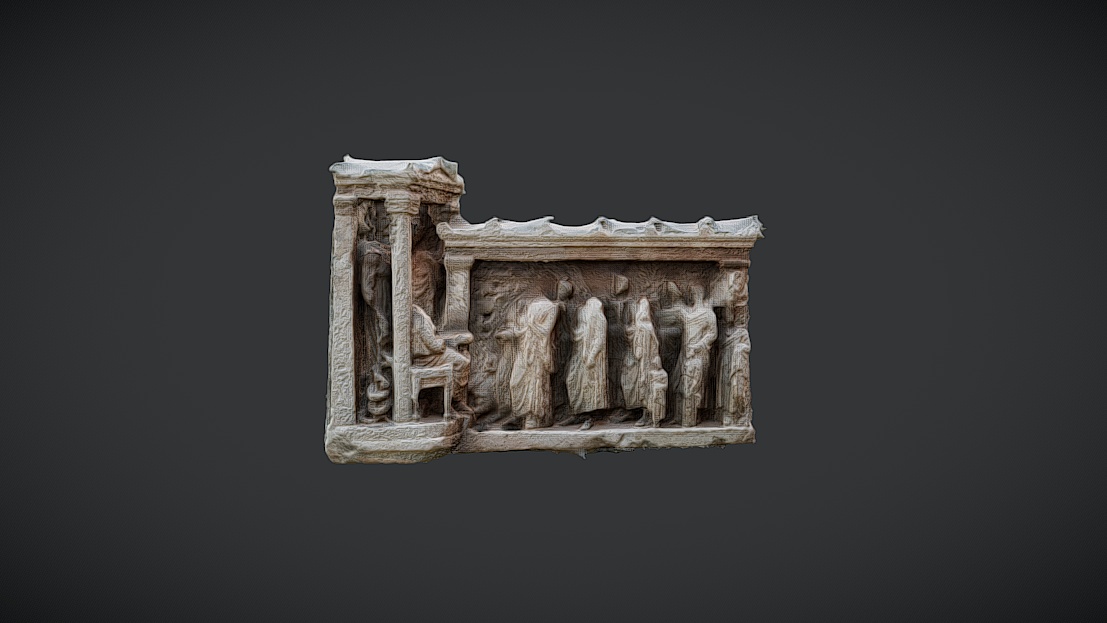
- Collection: Acropolis Museum, Athens; excavated from the Asclepeion sanctuary (Temple of the Healing God) on the Acropolis of Athens
- Type: Votive relief—a stone carving offered by ancient Greek devotees as a religious offering to the gods
Interpretation of the Scene
1. Left-side temple niche
Inside a small temple-like niche, Asklepios, the god of medicine, sits on a chair, flanked by his iconic serpent-staff coiled beside him. Standing nearby are his wife Epione (goddess of healing) and their daughter Hygeia (goddess of health). Snakes symbolized healing and rebirth in ancient Greece and were central to the iconography of the healing deity.
2. Right-side main scene
A group of worshippers—adults and children, both male and female—dressed in traditional Greek robes, approach the divine family with reverent postures. They come to offer prayers and sacrifices, seeking healing or giving thanks for divine favors. The figures' flowing drapery is finely and smoothly carved, characteristic of the classical Greek "wet drapery" technique, which uses fabric folds to express the human form and movement.