

Descripción
I. Core Highlights of the Model
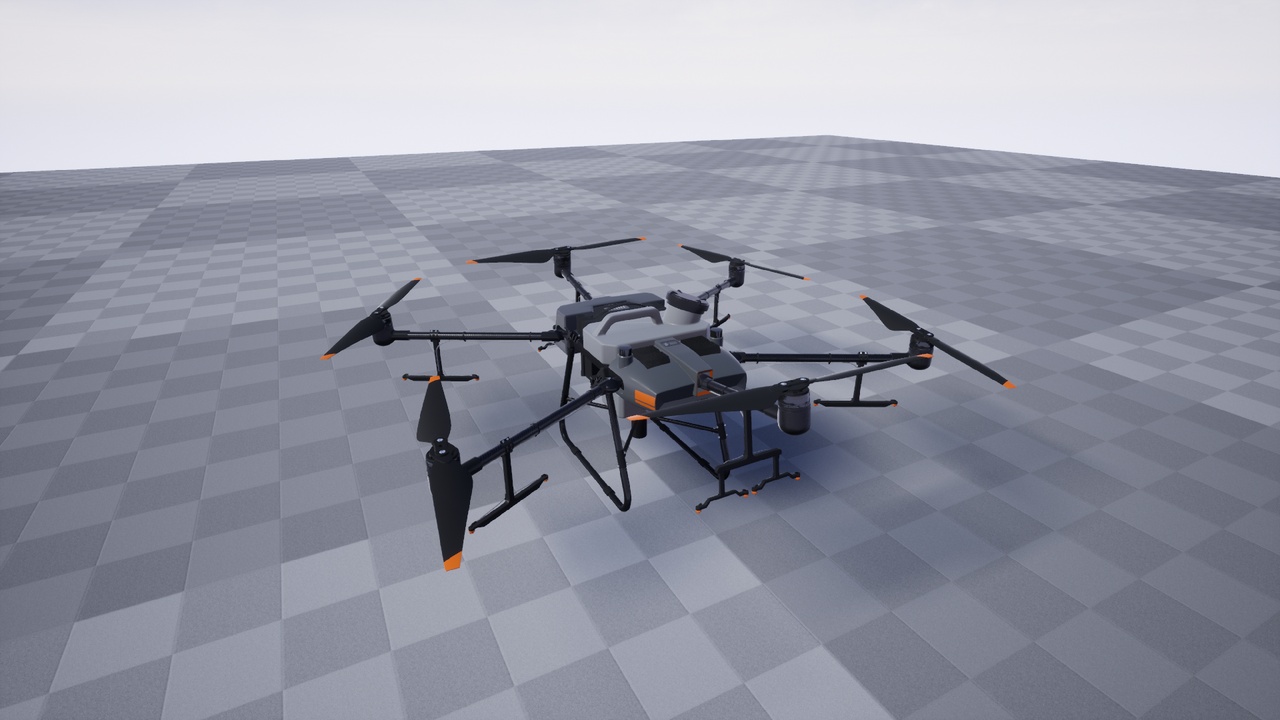
1:1 Physical Restoration: Modeling strictly based on the actual size, proportion, and industrial design data of the 30 drone, with key parameters such as the length, width, and height of the fuselage having an error of ≤0.5% compared to the physical entity, ensuring a high degree of consistency between visual and physical dimensions and perfectly matching the strict precision requirements of industrial-level applications. Please provide the text you would like translated.
The details are presented with ultimate precision: the streamlined body curvature is clearly replicated, the hinge structure of the foldable arms, the shock-absorbing design of the landing gear, the 360° gimbal interface (compatible with Zenmuse series payloads), the array of cooling holes on the side of the body and multi-color status indicator lights (power, signal, and payload working status), and even the details of the locking mechanism when the arms are extended can be restored. The gap between components is visible to the naked eye and is no more than 0.1mm. Please provide the text you would like translated.
Modular visualization: Fully present the modular design concept of the T30. Disassemble the fuselage into core flight modules, payload mounting modules, battery compartment modules, and communication modules. The connection interfaces and disassembly paths between each module are clearly visible, facilitating intuitive understanding of the equipment maintenance process and payload replacement steps (such as the quick disassembly logic of thermal imaging cameras and LiDAR).
Professional function restoration, with a focus on replicating the structural features corresponding to the core professional functions of the T30.
II. Model Technical Advantages
(1) High Fidelity and Performance Balance
Visual fidelity: Utilizing a PBR (Physically Based Rendering) material system and 4K high-definition textures (including diffuse, normal, roughness, and metallic maps), it accurately reproduces the carbon fiber texture of the body, the reflective quality of metal parts, and the anti-slip patterns of rubber materials, presenting a visual effect close to the real object in mainstream rendering software such as Blender and 3ds Max. Please provide the text you would like translated.
Topological optimization: Reasonably plan the number of model faces, with the total polygon count of the entire machine approximately 200,000 faces (core components such as the gimbal interface ≥ 50,000 faces, secondary decorative components ≤ 10,000 faces). This ensures detail accuracy while avoiding software lag caused by an excessive number of faces, and supports smooth operation in game engines like Unity and Unreal Engine as well as on the web via Three.js. Please provide the text you would like translated.
(II) Format Compatibility and Detail Grading
Multi-format support: Offers five mainstream formats - FBX, OBJ, GLTF/GLB, STL, and STP - to meet the needs of various scenarios.
FBX/GLB: Suitable for game engines, VR/AR development; Please provide the text you would like translated.
OBJ: Compatible with most 3D modeling software, facilitating material editing; Please provide the text you would like translated.
LOD (Level of Detail) classification: Three levels of detail models are provided based on application scenarios:
LOD 0 (the highest level): Complete details, used for static rendering and high-precision simulation; Please provide the text you would like translated.
LOD 1 (Intermediate): Simplify minor details (such as omitting slightly smaller heat dissipation holes) for real-time interactive scenes; Please provide the text you would like translated.
LOD 2 (Low): Significantly simplified structure, used for distant display or large-scale scenes (such as the simulation of multiple T30s working together).