Opis
Build WW2 bunkers, coastal batteries, trenches and shooter levels from one consistent stylized kit. Concrete walls are 1, 2 and 4 m modules on a 2 m grid with doors, loopholes, an ammunition hatch, a vent, niches and shell damage down to the rebar; ceilings come with steel beams and arched shuttering or flat board-formed concrete. Outside, the trench, berms, wing walls and roof edges fit the same grid. Architecture and furniture have collision, every mesh has lightmap UVs, and the materials are tiling PBR sets with tweakable wear and a close-up detail normal.
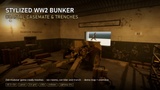
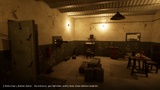
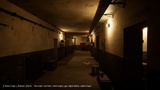
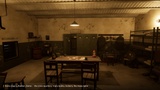
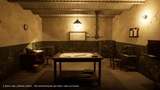
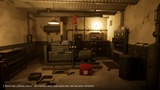
Normandy, the morning of 6 June 1944. The crew left in a hurry. The gun still points at the sea through the embrasure; spent casings roll across the floor, the range panorama is painted above the opening and the last shot is chalked on the wall. Down the corridor the bunks are unmade, a mug stands on the mess table, the plot table still holds the map and the diesel generator sits silent next to its day tank. The level reads as tense quiet after a fight, by day, and suits shooters: assault the bunker, hold it, or explore it.
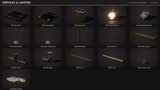
What's inside: 246 static meshes in 15 categories
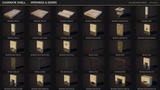
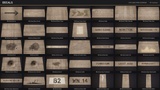
Casemate shell (15): plain, raw, damaged, niche and vent walls in 1 and 2 m (washed on one or both faces), 1 and 2 m floors, beamed, flat and hatch ceilings, a square pier.
Openings & doors (15): door walls, a wide double-door wall, the 4 m stepped embrasure, a close-defence loophole, an ammunition hatch, the plugged emergency exit; gas-tight, steel, wood and grate door leaves, a gas curtain, a steel ladder, a beam prop and a shoring frame.
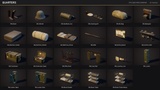
Gun room (13): the 7.5 cm anti-tank gun with shield (hero), shell racks, wicker shell baskets closed and open, a complete round, spent casings, rammer, spade rail, range board, MG loophole, field telephone and binoculars.
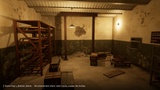
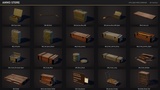
Ammunition store (20): ammo and grenade crates closed and open, mine crates and a mine stack, MG ammo boxes and belts, fuze cases, jerrycans, pallets and a crate stack, a broken crate, a tall shell rack, the tally board and an ammunition trolley.
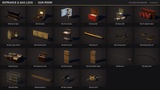
Entrance & gas lock (9): sentry desk, stretcher, gas-cape hooks, decontamination and sand bins, fire buckets, flare and first-aid boxes, a boot scraper.
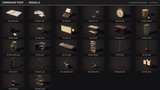
Command post (17): plot table, officer's desk, typewriter, desk lamp, wall map, filing cabinets closed and open, open safe, binders, folding cot, periscope, wall clock, logbook, papers, a burn bucket and a waste basket.
Signals (9): radio station and chart, switchboard, wall telephone, speaking tube, loudspeaker, alarm bell, gas alarm and signal lamp.
Crew quarters (23): double and triple bunks (one unmade), single, open and row lockers, footlockers, rifle rack and rifle, helmet rail and helmet, coat rail, laundry line, notice board, mattresses, blanket, backpack, kit bag, boots, gas-mask can and a cleaning kit.
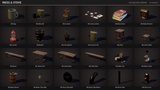
Mess & stove (24): iron stove with its pipe run, mess and field tables, benches, chairs and stools, wall shelf, water tank and barrel, wash stand and tub, food carrier, buckets, lantern, radio receiver, books, cards and letters, mugs, mess kit and canteen.
Workshop (12): workbench, tool and fire-tool boards, spare-parts shelf, open toolbox, engine parts, key board, extinguisher, hand lamp, grease gun, oil can and a bicycle.
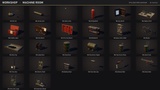
Machine room (14): diesel generator, large ventilation unit, fuel day tank, exhaust pipe, chain hoist, battery rack, electric panel and fuse box, fuel drums (one tipped, one with a pump), drip tray, cable reel and hand truck.
Services & lighting (16): bulkhead and pendant lamps, lit and off, conduits, cable trays, pipes, an elbow and a valve, duct, a hand-crank vent fan, junction box, floor drain, ring bolt and ceiling debris.
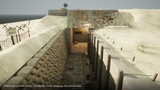
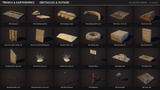
Trench & earthworks (13): 2 m trench floor, timber and sandbag trench walls, trench stair, duckboard, earth berm, sandbag stacks, spilled sandbags and a curved sandbag wall, a Tobruk ring, roof edge and wing walls.
Obstacles & outside (11): Czech hedgehog, stake obstacle, barbed-wire coil and 2 m fence, mine sign, searchlight, camouflage net, rubble and timber piles, two clumps of marram grass.
Mesh decals (35): German stencils (Munition, Gasschleuse, Notausgang, Rauchen verboten, room signs), arrows, the range panorama and firing table, chalk tallies, a chalk calendar and ship, camouflage paint, soot, scorch, shell and bullet scars, cracks, damp, lime, rust and water streaks, oil, puddle stains, boot prints, drag marks and sand drifts. All lettering is drawn by our own stencil strokes; there are no Third Reich symbols anywhere in the kit.
Two maps
L_Bunker_Demo: the whole casemate block from the trench through the entrance and gas lock into the corridor, the gun room, the ammunition store, the crew quarters, the command post and the machine room, with the dune, wire and obstacles outside. Real-time Lumen, sunlight through the embrasure, volumetric fog and the bulkhead lamps inside. Press Play to walk through.
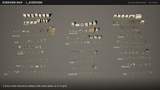
L_Overview: every mesh laid out by category with name labels on a 1 m grid.
Materials you can tweak
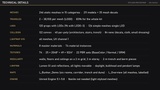
8 master materials and 74 material instances. The surface instances expose tint, tiling, paint chipping, edge wear, height-based grime, streaks, dust, macro variation, a detail normal for close-ups and a roughness override; the maps, charts and notices keep their artwork fixed while the wear still varies.
Game-ready
Collision: per-poly (complex as simple) on 40 architecture and trench pieces, so doorways, the embrasure and the trench stay open; convex hulls on 122 props; none on 84 pieces (the 35 decals, cloth, papers, cables and small dressing).
LODs on 120 props; the other meshes (architecture, decals and simple pieces) have a single LOD.
Lightmap UVs on every mesh, in UV channel 1.
Clean topology: no hidden buried faces and no overlapping coplanar faces (checked by our own gates before export).
No Nanite needed. All lights are movable, so there is no light baking.
One download for Unreal Engine 5.1 to 5.8. It is content only: no code, no plugins.
UEFN version
The listing also has a UEFN Source format: the same 246 meshes, materials and procedural textures as a UEFN project, made and validated in UEFN 42.40.
One island holds the whole demo with its beach backdrop and a catalog of every mesh. Complex meshes have up to 4 LODs, and every LOD0 is under the UEFN limit of 30,000 vertices.
The catalog has no name labels, because UEFN does not accept text actors.
Unity version
The Unity format is the URP version of the kit for Unity 2022.3 LTS or newer, also tested in Unity 6.1: 246 prefabs with colliders and lightmap UVs, but no LODs.
It has a baked daylight demo scene with a first-person controller, a labelled overview scene and a volumetric fog renderer feature for URP.