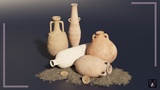
Descrição
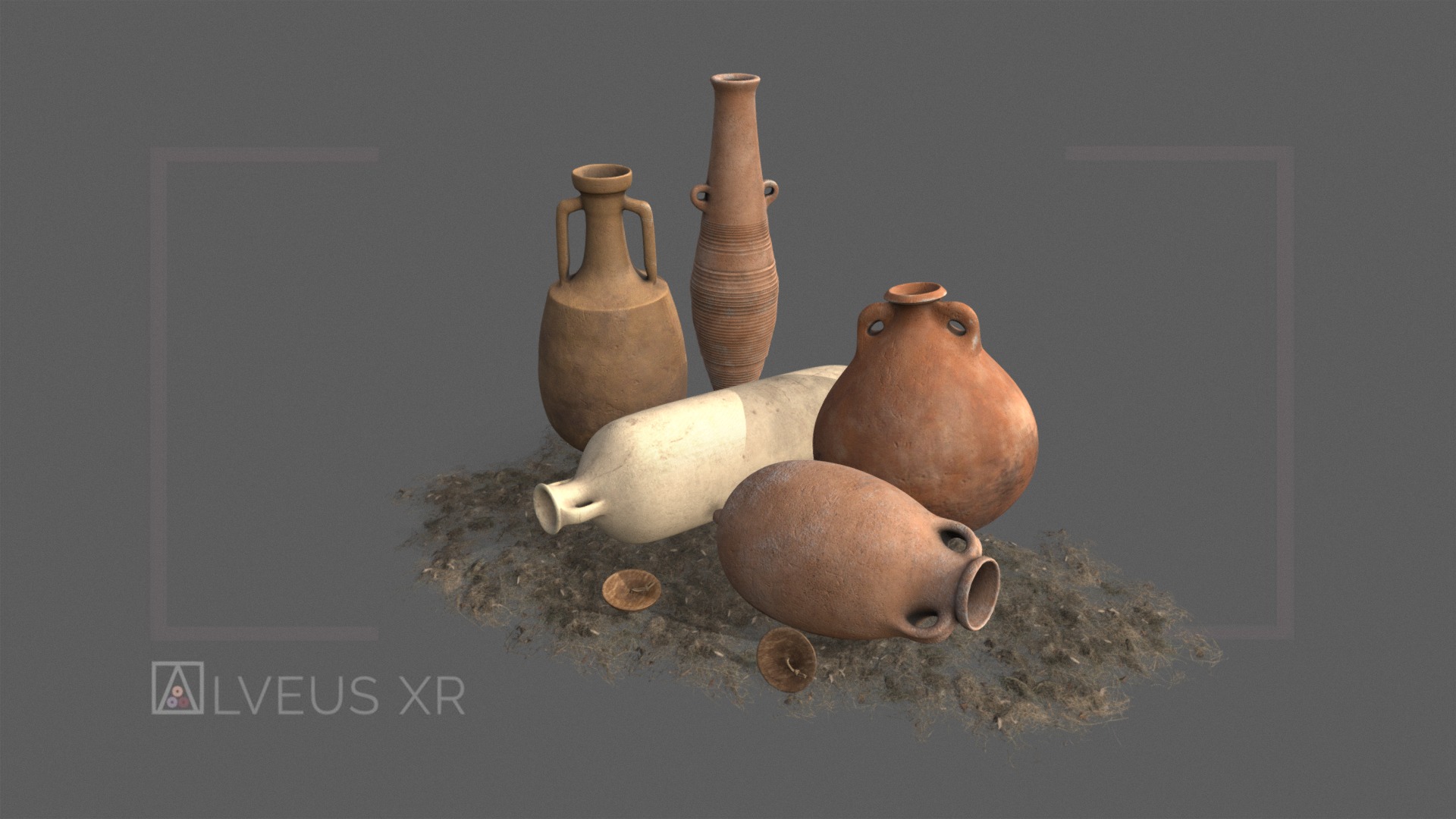
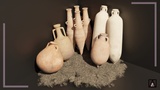
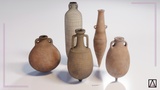
Set of amphorae of different types used for the transport and trade of oil over long distances. In this set we can find a Dressel 20, Lamboglia 2, Keay 27, Oberaden 83 and a Punic-Ebusitan PE16.
The amphorae, being large ceramic vessels, were usually accompanied by a support when they were not buried in the ground. These narrow feet facilitated stowage (proper distribution of goods on a ship), stacking the amphorae on several levels, which allowed the ship’s internal space to be used to the maximum. They were used as the main means of storing wine, oil, cereals, fish, grapes, olives, salted products such as garum, etc. Their production was so cheap that they were often not reused. Specifically, this virtual reconstruction corresponds to amphorae types of oil from Baetica and the Balearic Islands.
Ibiza will be an important producer of olive oil, as shown by the studies of the island carried out by the team of C. Gómez Bellard (1996, 2003; PUIG) studies of the island carried out by the team of C. Gómez Bellard (1996, 2003; PUIG, GÓMEZ BELLARD and DÍES 2004; MARÍ, PUIG and GÓMEZ BELLARD 2005). From the end of the 3rd century to the 1st century B.C. there will be a specific amphora for the packaging and transport of this product: the one known as PE16,
Since the time of Augustus, the valleys of the Guadalquivir and Genil were already covered with olive groves. The studies on the Roman occupation of the territory by J. M. Blázquez and J. Remesal have revealed a whole agrarian and economic structure of production centers, fluvial embarkation points and amphora manufacturing sites (more than 80 workshops). Its oil was bottled in the characteristic almost spherical amphorae, the Dressel 20, of which millions were exported to Rome.
More info: Roman Amphorae (Pack 3)