




Descripción
AI content generation, without the risk.
Large language models are powerful but unpredictable — they hallucinate items that don't exist, invent broken objectives, and hand you malformed JSON. Shipping that in a game is a nightmare.
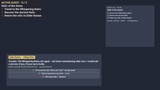
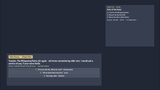
Everlore Engine fixes this. Every quest, dialogue and NPC reply the AI produces is schema-constrained, validated against your own rules, automatically repaired, and — if it still isn't usable — replaced with a deterministic template. A generated quest can never reference an id you didn't allow, exceed the reward budget you set, or become uncompletable. Your game logic only ever sees a guaranteed-valid result. No "the AI returned garbage" branch. Ever.
The result is reported with a clear provenance badge — AI-Validated, AI-Repaired, or Template (Game-Safe) — so you always know exactly how a quest came to be.
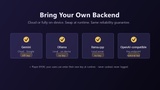
Bring your own backend. Everlore ships no keys and no bundled model. Use Google Gemini in the cloud, run Ollama or a llama.cpp server locally, or point it at any OpenAI-compatible endpoint (OpenRouter, LocalAI, vLLM, …). Switch backends at runtime. The same reliability guarantee applies to every one of them — verified live against Google Gemini and a local 8-billion-parameter model.
Bring your own key (BYOK). Let your players enter their own API key at runtime — keys are held in memory on their machine only, and are never cooked into your build, never logged, never saved.
Component-first, no C++ required. Drop an Everlore Quest Giver on an NPC, an Everlore Quest Log on the player, wire the Generate Quest (Async) node, and you're generating validated quests from Blueprint in minutes. NPC roleplay chat is the same story: a persona-driven Conversation Component with rolling memory and a Talk To NPC (Async) node.
KEY FEATURES
• Guaranteed-valid AI quests — validate → auto-repair → deterministic fallback.
• Whitelisted allowed-id + reward-budget guardrails you define per game.
• NPC roleplay chat with persona, long-term memory, and safe whitelisted intents.
• Bring your own backend: Gemini, Ollama, llama.cpp server, any OpenAI-compatible API.
• Bring your own key (BYOK) — player- or developer-supplied, never cooked or logged.
• Drop-in components + async Blueprint nodes — no C++ required.
• Replicated, server-authoritative quest log with save/load (portable blob or slot).
• Editor batch tool: bake generated quests into a DataTable for deterministic shipping.
• Provenance reporting so you can badge AI-Validated / AI-Repaired / Template content.
Everlore Engine is the reliability layer that makes generative AI safe to ship.
TECHNICAL DETAILS
• Engine version: Unreal Engine 5.8
• Type: C++ Code Plugin (full source included)
• Modules: EverloreCore (Runtime), EverloreTransport (Runtime), EverloreLlamaLocal (Runtime; Win64), EverloreEditor (Editor)
• Supported platforms: Windows (Win64)
• Network Replicated: Yes (quest log state)
• Number of Blueprints: 0 (C++ plugin; example Blueprints in documentation)
• AI/Cloud service note: Requires a user-supplied LLM backend. Cloud backends (Google Gemini, or any remote OpenAI-compatible endpoint) send prompts and player chat to that third-party service, subject to that provider's terms; local backends (Ollama, llama.cpp) keep data on-device. No API keys or model binaries are included with the plugin.
Documentation: https://wiki.teufel-engineering.com/en/EverLoreEngine
Support: [email protected]