
Descrição
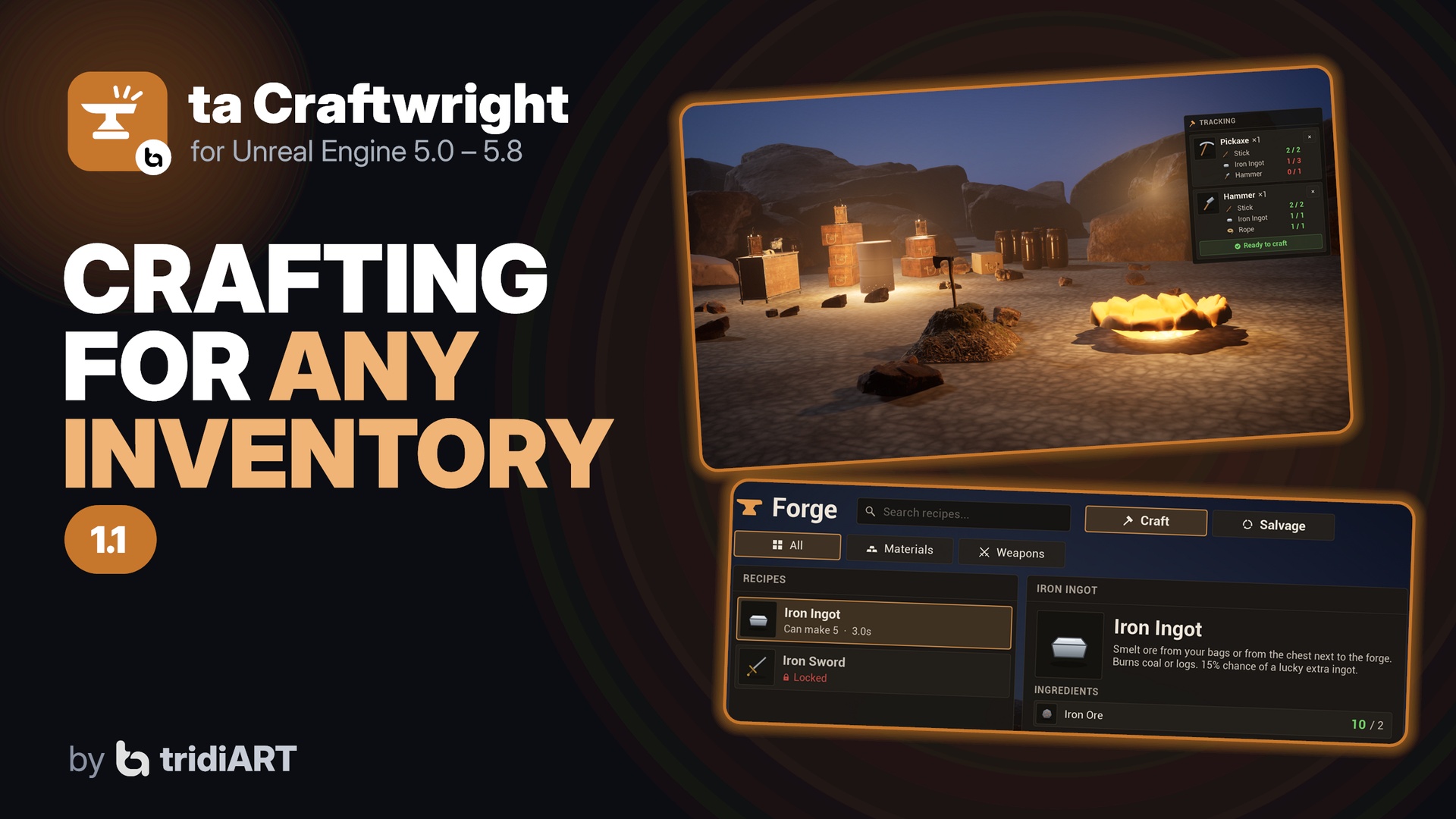
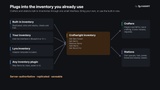
Crafting that plugs into the inventory you already use. Most crafting on Fab comes inside an inventory pack, and you have to adopt that inventory to get it. ta Craftwright is a C++ crafting core that works with any inventory through a five-function interface: the built-in replicated inventory, your own inventory in Blueprint or C++, Lyra (adapter template included) or another inventory plugin.
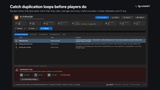
Recipes are data assets. Crafters queue jobs in batches, stations keep working while the player walks away, fuel burns, ingredients come from nearby chests, recipes are learned or discovered, and jobs survive save games. Everything is server-authoritative and replicated. In the editor, ta Craftwright checks your recipes for broken data and for crafting loops that would let players make endless items.
Personal license $9.99 for buyers with up to $100,000 USD in gross revenue in the last 12 months, Professional license $29.99 above that. Both give the same rights (see the Fab EULA).
Features
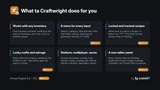
Works with any inventory: five functions (count, list, remove, add, room) connect crafting to your inventory. Map your items by class, asset or id; a helper finds the Craftwright item for your item.
Recipes as data assets: specific items or any item with a tag ("any wood"), tools that are needed but not used up, several outputs with chances, failure chance with partial refunds, max batch, craft time, station types.
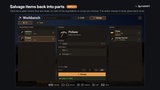
Lucky crafts and salvage: a bonus chance for extra items (the crafter's luck raises it), and items that players take apart again for part of their ingredients or for scrap you choose.
Queues: batches, one job after another, cancel with refunds, an output tray for results that fit nowhere. Ingredients are taken when a job is queued, so they cannot be spent twice.
Stations: workbench, forge, campfire. Each has a type, a speed (optionally times the crafter's own speed), its own queue that keeps running when the player leaves, an interaction range checked on the server, fuel burnt from its storage, a power hook, linked chests and a pull radius for nearby storage.
Unlocks: always known, learned (scrolls, trainers, quests, or by crafting another recipe) or discovered automatically the first time the crafter holds an item for every ingredient. Learned recipes can have limited uses (one-shot blueprints).
Multiplayer: requests go through the player's crafter to the server and are validated there. Jobs and inventories replicate with fast arrays (owner-only where it should be), and progress bars run smoothly on clients without traffic every frame. Tested with a dedicated server and a client.
Save games and offline progress: plain structs for any save system; time that passed while the game was closed is caught up on load.
Rules you can extend: conditions (skills, levels, quests) and effects (XP, stats, achievements) are objects you subclass in Blueprint or C++.
Optional GAS module: ability-system tags and attributes as conditions, attribute costs paid when crafting starts (stamina, mana), Gameplay Effects and gameplay events after each craft, crafting speed and luck from attributes (Craftwright Crafter GAS), station speed from the station's own attribute (Craftwright Station GAS).
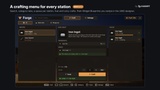
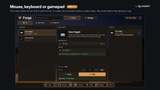
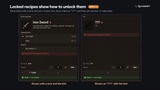
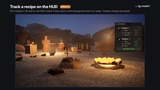
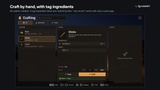
A crafting menu for keyboard, mouse and gamepad: search (typing in it does not reach your game), category tabs, locked recipes with how to unlock them, a salvage mode, key hints that follow the device, and a HUD tracker for pinned recipes that shows what is still missing. C++ base classes hold the logic; the example widgets are plain Widget Blueprints you restyle in the UMG designer, and every text can be changed and localized.
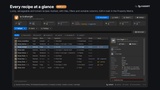
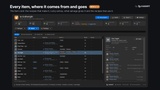
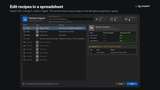
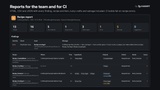
Editor tools: a panel with every recipe, item and finding, an item card that shows where each item comes from and goes, and bulk editing in the Property Matrix; checks in Data Validation; duplication-loop detection (salvage and lucky crafts included); CSV and JSON import with a preview of every change; HTML, CSV and JSON reports; a commandlet that fails a CI build on recipe errors; Python and Blueprint API.
Example map: three stations (one with fuel), a shared ore chest, resource nodes, 16 items with icons and 10 recipes that show every feature.
How to use
1. Create items, recipes and a recipe book (Content Browser > Add > Craftwright).
2. Add a Craftwright Crafter component to the player controller, pawn or player state and give it the book. Add a Craftwright Player Inventory next to it, or connect your own inventory.
3. Add a Craftwright Station component to your workbench actors.
4. Open the crafting menu (or your own UI) with the crafter and the station.
Open /TACraftwright/Examples/Maps/L_CraftwrightExample and press Play to try it: WASD move, E use, Tab hand crafting; with a gamepad, the sticks move and look, A uses, Y opens hand crafting and B closes the menu. The editor panel is in Tools > ta Craftwright.
Supported
Unreal Engine 5.0 to 5.8. Runtime modules for Windows, Mac, Linux, Android and iOS; editor tools for Windows, Mac and Linux. C++ source included; Blueprint-friendly API.
Documentation: https://tridiart.com/docs/craftwright/
Support: https://tridiart.com/contact/