Descripción
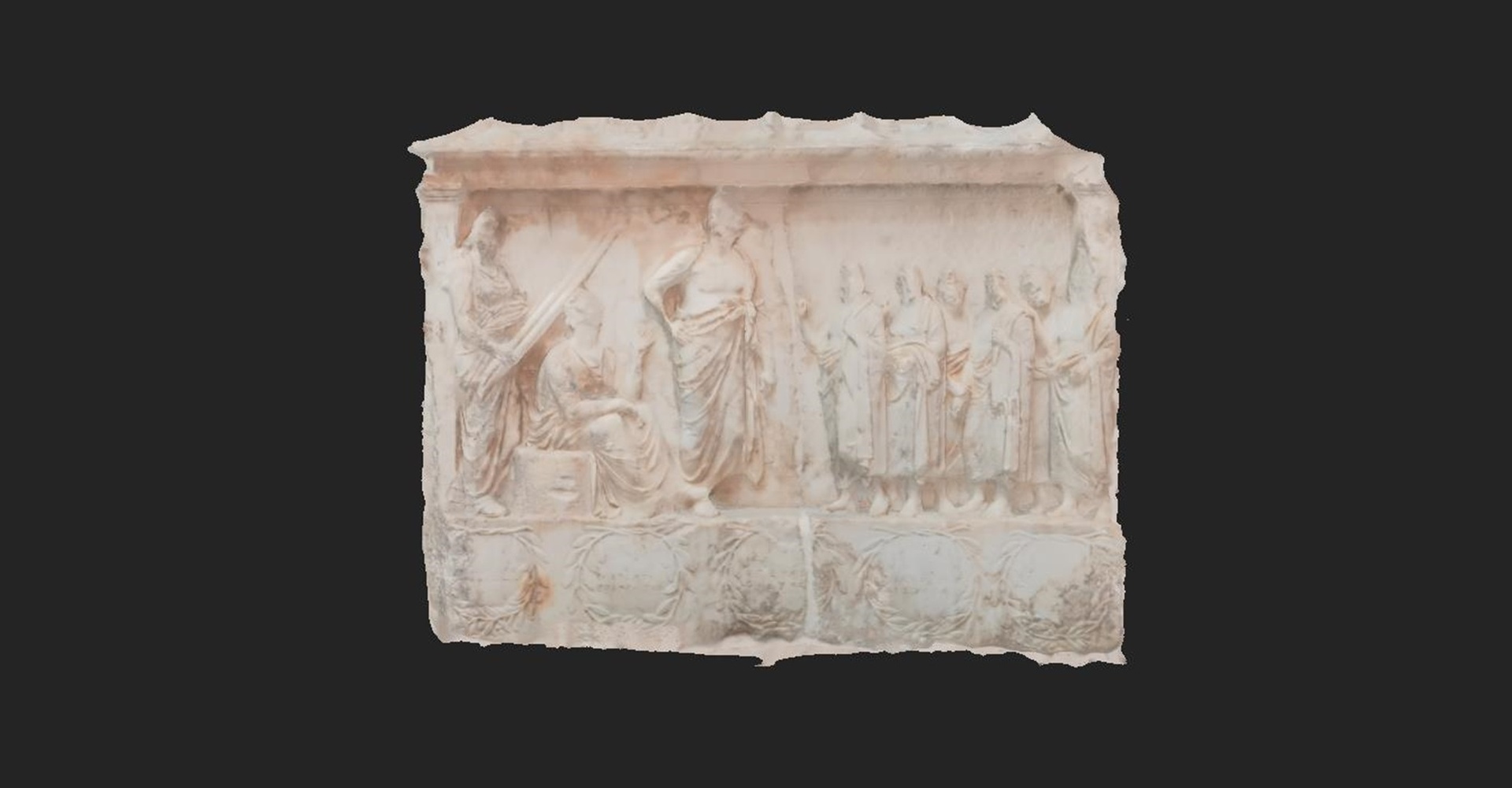
The Acropolis Museum - Slope Exhibition Hall, Pentelic Marble, 350–300 BC, Late Classical Period, unearthed from the Asclepius (God of Medicine) sanctuary on the southern slope of the Acropolis, and was found in the same archaeological area as the previous groups of reliefs.
Basic Information
- Full Name: Offering Relief, dedicated to the God of Medicine Asclepius
- Material: Pentelic Marble
- Dimensions: Height 0.86 m, Length 1.15 m
- Excavation: On the southern slope of the Acropolis, at the Asclepius Temple, the relief was broken into two pieces when unearthed and has now been pieced together and restored
- Type: Votive Relief (Offering Relief), when a believer recovers from illness, they would carve a stone slab and present it to the God of Medicine to express gratitude for the cure
Interpretation of the Picture by Regions (from left to right)
1. Leftmost: Hygieia (Health Goddess)
Daughter of the God of Medicine, holding a large snake staff (the sacred snake of Asclepius, a symbol of ancient Greek medicine), standing, wearing a long robe. The snake represents rebirth and healing, being the source of the symbol of Western medicine.
2. Left Middle: Epione (Epione, the Wife of the God of Medicine, the Comforting Goddess)
Seated on a stone bench, with a calm posture, representing soothing and recovery, she is the goddess who guards the patients.
3. Center of the Picture: Asclepius (Asclepius, the God of Medicine)
The core figure of the relief, standing, with one hand on his waist, wearing a long robe, with a solemn expression. The most central deity of medicine in ancient Greece, the temple would use "dream therapy" to let patients sleep in the sanctuary and receive divine wisdom for curing diseases.
4. Right: Ordinary believers coming to offer sacrifices (group of physicians and recovered individuals)
A team of believers, all wearing long robes, lined up to worship the God of Medicine.
The relief is commonly known as the "Physician Relief" because among these worshippers were ordinary physicians, who paid tribute to the God of Medicine, symbolizing the combination of human medical skills and the sacred healing power.
5. Bottom of the Relief: Inscriptions and Laurel Wreath Decorations
Below are two groups of laurel wreaths, with inscriptions inside the wreaths recording the names of the donors; the laurel symbolizes purity and sanctity. At the top is a simplified triangular cornice shape of the temple, making the relief into a miniature facade of the temple.