Description
Lorica Segmentata – Kalkriese Type | Early Roman Armor 3D Model
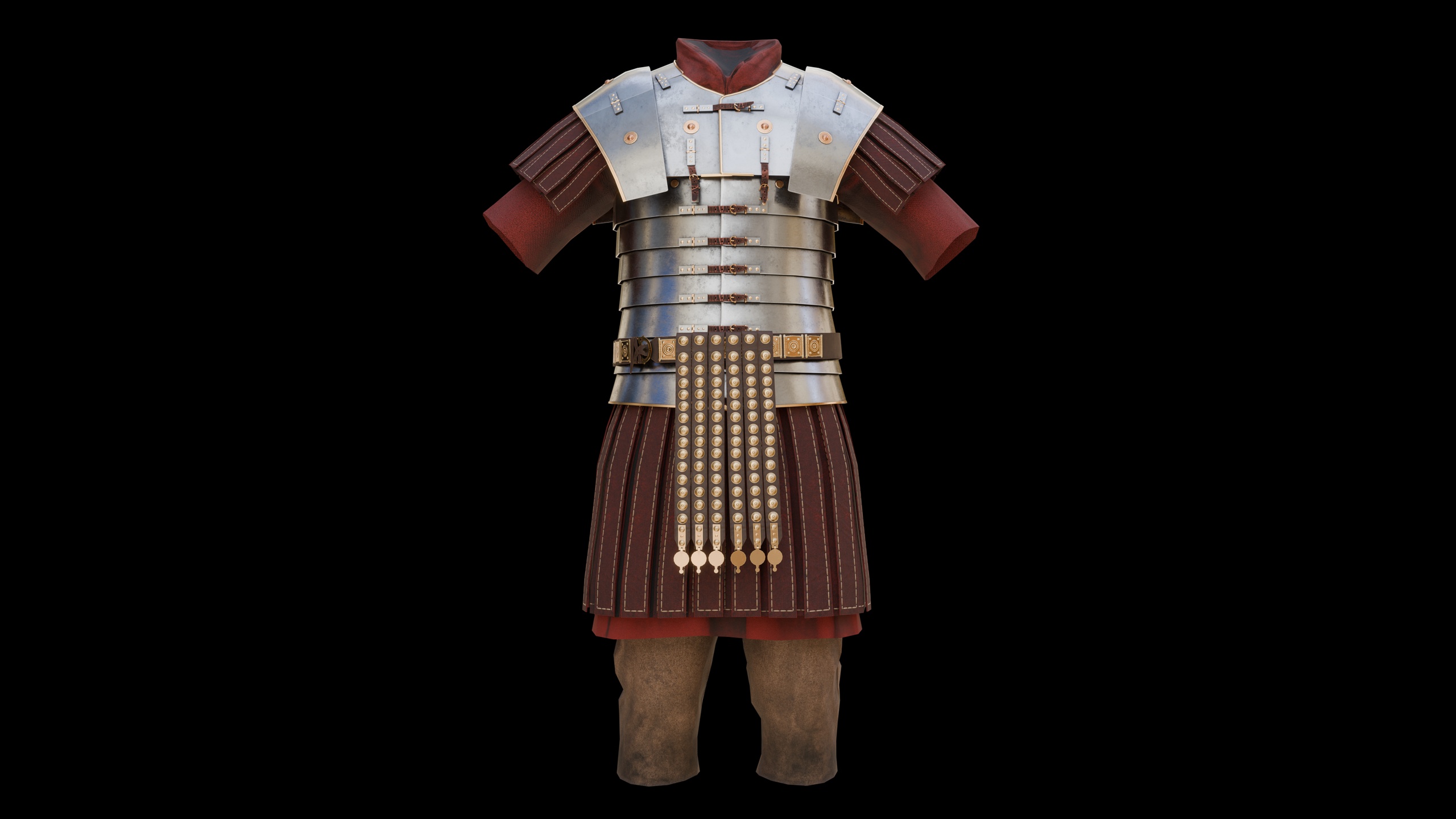
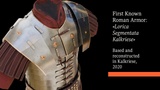
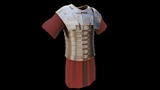
This 3D model represents the Kalkriese type of Lorica Segmentata, the earliest known variant of Rome’s segmented armor, based on archaeological discoveries at the site of Kalkriese, Germany, associated with the Battle of the Teutoburg Forest (9 AD).
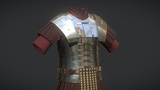
The Kalkriese Segmentata is considered a prototype or first-generation design, used during the reign of Augustus and possibly into the early Julio-Claudian period. Its construction is more rudimentary than later types, relying heavily on external leather straps and tin-coated bronze fittings for assembly and articulation. Notably, it lacks the extra side shoulder plates introduced in later models such as Corbridge, and its overall structure appears slightly longer, possibly for greater torso protection.
This model was developed after a detailed analysis of published archaeological reports and reconstruction studies (2020–2023). The result is a historically grounded and well-optimized digital recreation, perfect for:
Educational visualizations and museums
Game or film assets
Reenactment and armor reference
Historical 3D printing projects
Model Features:
Medium poly count optimized for general use
Historically accurate dimensions and strap systems
External tin-plated fittings modeled as seen in reconstruction research
UV-mapped and clean mesh
Formats available: [.fbx, .obj, .blend, etc.]
Ideal for anyone seeking to explore the earliest evolution of Roman legionary armor, this piece brings the story of the Teutoburg disaster into vivid digital form.