Description
Basic Information
- Period: 443–438 BC, the peak of Classical Greece, designed by Phidias
- Material: Pentelic marble
- Origin: Fragment of the East Frieze of the Parthenon, currently housed in the Acropolis Museum, Athens
- Theme: The Panathenaic Procession, with the Olympian gods seated and observing the ceremony Interpretation of the Picture
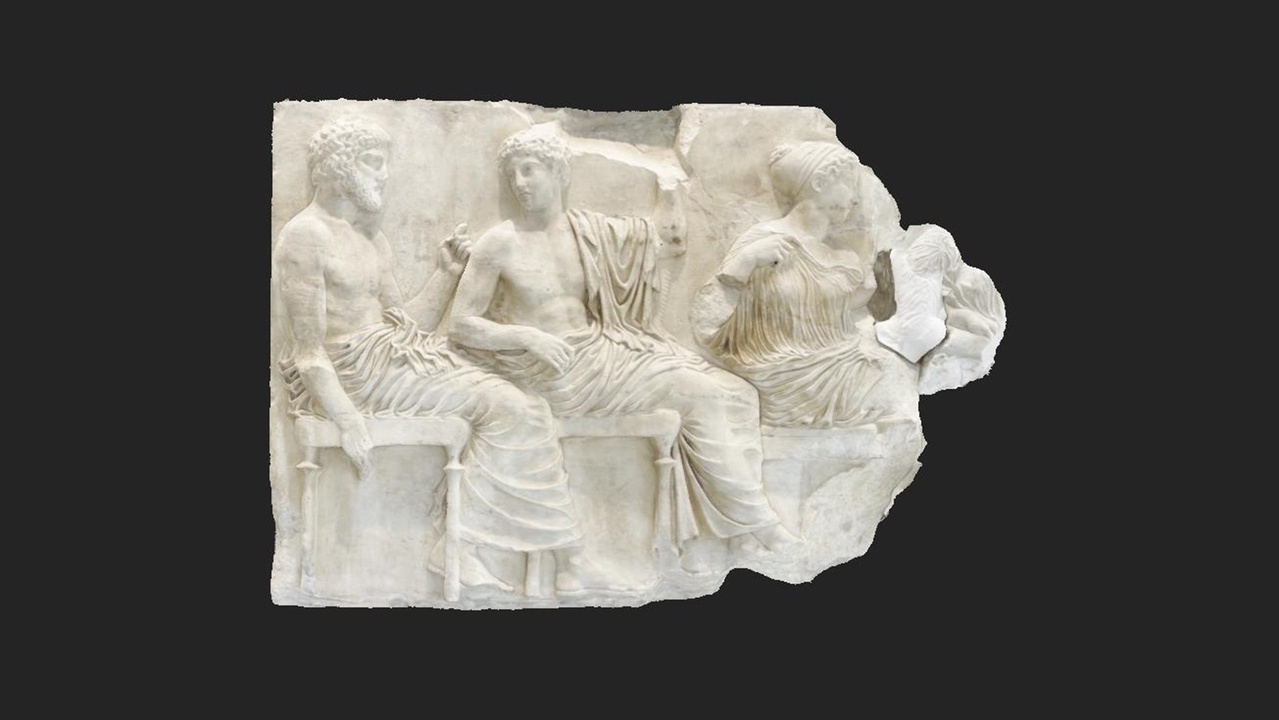
The three deities in the relief from left to right:
1. Poseidon (Poseidon): On the left, the bearded sea god, with a bare upper body, wearing clothing, raising his right hand to gesture for conversation, with a solemn expression.
2. Apollo (Apollo): In the middle, the young god of the sun, draped in a long robe, with a relaxed and elegant posture, turning his head to converse with Poseidon, with his left hand resting, embodying the ideal male figure in classical aesthetics.
3. Artemis (Artemis): On the right, the moon goddess and huntress, wearing a hairband, dressed in a heavy pleated skirt, slightly turning her body, looking at the procession; there is also a partially missing figure at the far right.
The gods, as spectators, are seated on either side of the celebration, witnessing the sacrificial procession of the Panathenaic Festival.