Opis
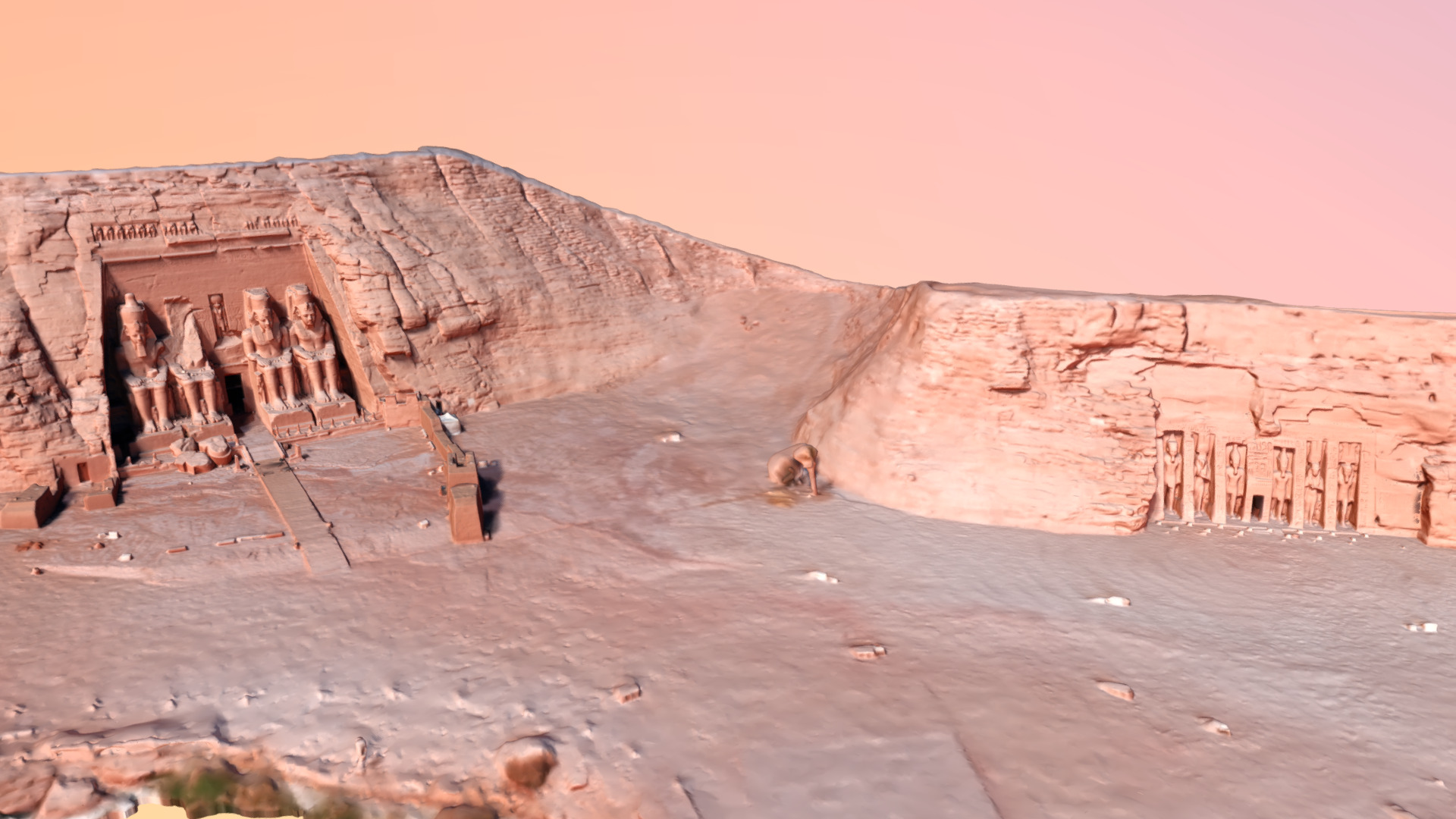
Abu Simbel is a historic site comprising two massive rock-cut temples in the village of Abu Simbel, Upper Egypt, near the border with Sudan. It is situated on the western bank of Lake Nasser, about 230 km southwest of Aswan. The twin temples were originally carved out of the mountainside in the 13th century BC, during the 19th Dynasty reign of the Pharaoh Ramesses II. Their huge external rock relief figures of Ramesses II have become iconic. His wife, Nefertari, and children can be seen in smaller figures by his feet. Sculptures inside the Great Temple commemorate Ramesses II’s heroic leadership at the Battle of Kadesh.
The complex was relocated in its entirety in 1968 to higher ground to avoid it being submerged by Lake Nasser, the Aswan Dam reservoir. As part of International Campaign to Save the Monuments of Nubia, an artificial hill was made from a domed structure to house the Abu Simbel Temples.
Model made by photogrammetry, a printable STL file is available in the additionnal file.