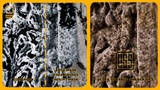



Beschreibung
ULTRA SURFACE SHADER V1.4
From textures to a finished surface, faster.
Building a believable surface in Unreal Engine usually means UV unwrapping first, then rebuilding the same master-material logic for every project before your textures even look right.
Ultra Surface Shader reduces that setup work. Advanced Mapping can reduce or eliminate custom UV unwrapping on many props, environment assets, scanned meshes, blockouts, and cinematic set pieces, while regular UV mapping stays available for decals, trims, logos, atlases, and any placement that must stay fixed to the mesh.
Drop in textures.
Choose the mapping method.
Build the surface.
USS 1.4 is designed around material instances and clear parameter groups. Start by choosing the master material that matches your surface, assign your textures, then enable only the mapping, stochastic, overlay, mask, cloth, or displacement features your material actually needs.
USS 1.4 adds independent Advanced 9-Plane Mapping and Single Sample controls for supported mapping branches, alongside Unreal Engine 5.8 package support, Mesh Paint mask support where exposed, optional stochastic tiling, and slot-driven texture handling for color, linear/packed, mask, normal, height, and displacement inputs.
Regular UV mapping remains fully supported and is recommended for authored UV layouts, decals, trim sheets, logos, atlases, and any placement that must stay fixed to the mesh UVs. Advanced Mapping and Advanced 9-Plane Mapping are available when a surface benefits from projection-based mapping.
THE THREE FAMILIES
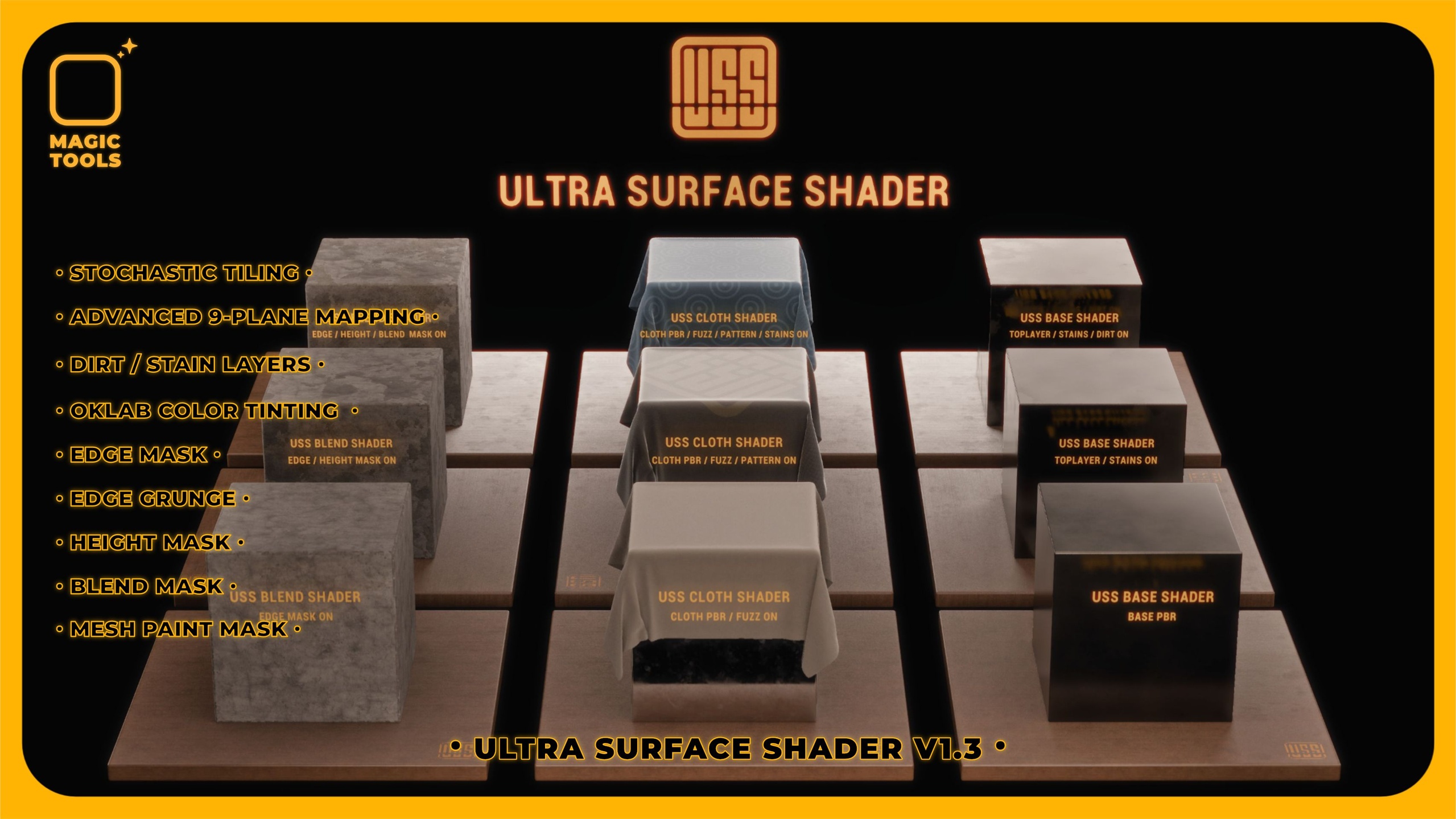
- USS Base - single-surface PBR workflow with optional overlays, dirt, stains, normal, AO, and displacement controls. Includes a Base VT variant for Virtual Texture workflows.
- USS Blend - layered A/B workflow with BlendMask, Edge Mask, Height Mask, Edge Grunge, Dirt, Stains, mask-to-normal support, and blended displacement.
- USS Cloth - cloth-focused fuzz color, optional fuzz mask, albedo-derived mask fallback, and view-dependent fabric response. Includes a Cloth VT variant.
NEW IN VERSION 1.4
- Separate Fab packages for Unreal Engine 5.7 and Unreal Engine 5.8.
- Texture Mesh Paint mask support where exposed in the current shader setup.
- Mesh Paint channel workflow for localized Dirt, Stains, and TopLayer / BlendMask contribution.
- Optional Base normal texture enable/fallback handling where exposed.
- Hover descriptions/tooltips added to exposed Material Instance parameters in the current UE 5.8 master materials.
- Visible parameter spelling cleanup in the current UE 5.8 masters and matching material instances.
- Reduced packaged plugin requirements to Unreal's built-in Mesh Paint support set.
- Updated English documentation, Quick Start, changelog, and parameter reference.
EASY TO ENTER, BUILT TO STAY USEFUL
A new Unreal user can duplicate a clean starting instance, assign textures, and get a strong result without editing the master graph. An experienced artist can keep going into Advanced Mapping, Advanced 9-Plane Mapping, layered Base and TopLayer blending, Texture Mesh Paint masks, hard and soft masks, height and edge breakup, normal and displacement carry-through, cloth fuzz response, OKLab color, packed textures, and optional stochastic tiling. The first result is approachable; the system does not become limiting when the project gets more demanding.
ONE SYSTEM, MULTIPLE COST LEVELS
USS gives you several paths instead of one fixed high-cost configuration. Keep simple assets cheap with regular UV and standard sampling.
Step up to Advanced Mapping or Advanced 9-Plane Mapping where projection-based mapping improves the result. Reserve optional Stochastic Tiling for the surfaces where visible repetition actually needs breakup.
Use Mesh Paint masks only where localized painted control is useful.
Static-switch-driven features mean you only pay for the branches a material uses.
Spend shader cost where the camera can see the difference.
FEWER TEXTURES, LIGHTER SCENES
Authored UVs and atlases usually mean one texture set per asset.
In a game or cinematic with many assets, that adds up fast in texture memory and final package size.
USS lets you drive a whole asset group from one configurable master with shared textures, varying the look per object instead of authoring a new texture set for each one.
It will not fit every object, and hero assets often still deserve bespoke texture work, but across environment, background, and landscape assets it can meaningfully reduce unique texture count and package size.
KEY FEATURES
- Five master materials across three families: USS Base, USS Blend, USS Cloth, plus Base VT and Cloth VT
- Separate UE 5.7 and UE 5.8 Fab packages
- Five clean master starting instances
- Advanced Mapping with regular UV fallback
- Independent Advanced 9-Plane Mapping and Single Sample controls for every supported mapping branch
- Optional Stochastic Tiling for selected Texture2D branches
- Mesh Paint mask workflow for direct painted mask contribution where exposed in the current shader setup
- Slot-driven texture handling for color, linear/packed, mask, normal, height, and displacement inputs
- PBR texture workflows with albedo, metalness, specular, roughness, normal, opacity, AO, and displacement branches
- Hard or Soft Blend Masks with threshold, fade intensity, and matching soft height blending
- Optional Base normal and displacement carry-through into the visible TopLayer
- OKLab color adjustments with extra brightness headroom for dark source textures
- Linear Gloss/Reflection workflow using grayscale reflection data
- Packed texture support for ORM, ORD, MRD, and custom RGBA packing
- Demo and showcase levels plus updated English documentation
BROAD SURFACE COVERAGE
One coherent material language across a scene instead of a different shader for every asset:
hard-surface props, architecture, environment assets, rocks and organic surfaces, metals and painted metals, concrete, plaster, stone and wood, dirt, stains, residue, moss and coatings, layered damage with exposed lower materials, and fabric-style fuzz response.
WORKFLOW NOTES
- Regular UV mapping remains the most exact and economical path for authored UVs, decals, trims, logos, and atlases.
- Advanced Mapping and Advanced 9-Plane Mapping should be enabled only where projection-based mapping improves the result.
- Texture Mesh Paint requires a suitable mesh UV layout and an added Mesh Paint texture on the selected asset.
- Mesh Paint channel view modes show the Mesh Paint texture channels, not the final composed USS material mask stack.
- Soft BlendMask is intended for moss, residue, dust, coatings, and other gradual transitions. Keep it disabled for crisp damage and material separation.
- Virtual Texture variants are included for Base and Cloth workflows.
- Reflection inputs use linear grayscale/specular-style data; no separate colored metal-reflection branch is required.
HONEST LIMITS
- USS solves material assembly, mapping, layering, masking, and art direction inside Unreal Engine. It does not replace dedicated texture painting for uniquely authored hero assets, and it does not remove the value of authored UVs where exact placement matters.
- Stochastic Tiling is an optional, targeted quality tool for visible repetition, not a default for every texture slot.
- Texture Mesh Paint quality depends on the mesh UV layout, Mesh Paint texture resolution, and brush settings.
RENDERING NOTES
- Edge Finding is designed for Lit/raster rendering, not Path Tracer.
- Displacement should be treated as a Nanite/Lit workflow.
- No customer-installed code plugin is required.
USS is delivered as Unreal Engine content; install it, choose a starting instance, and work inside familiar Material Instance controls.