설명
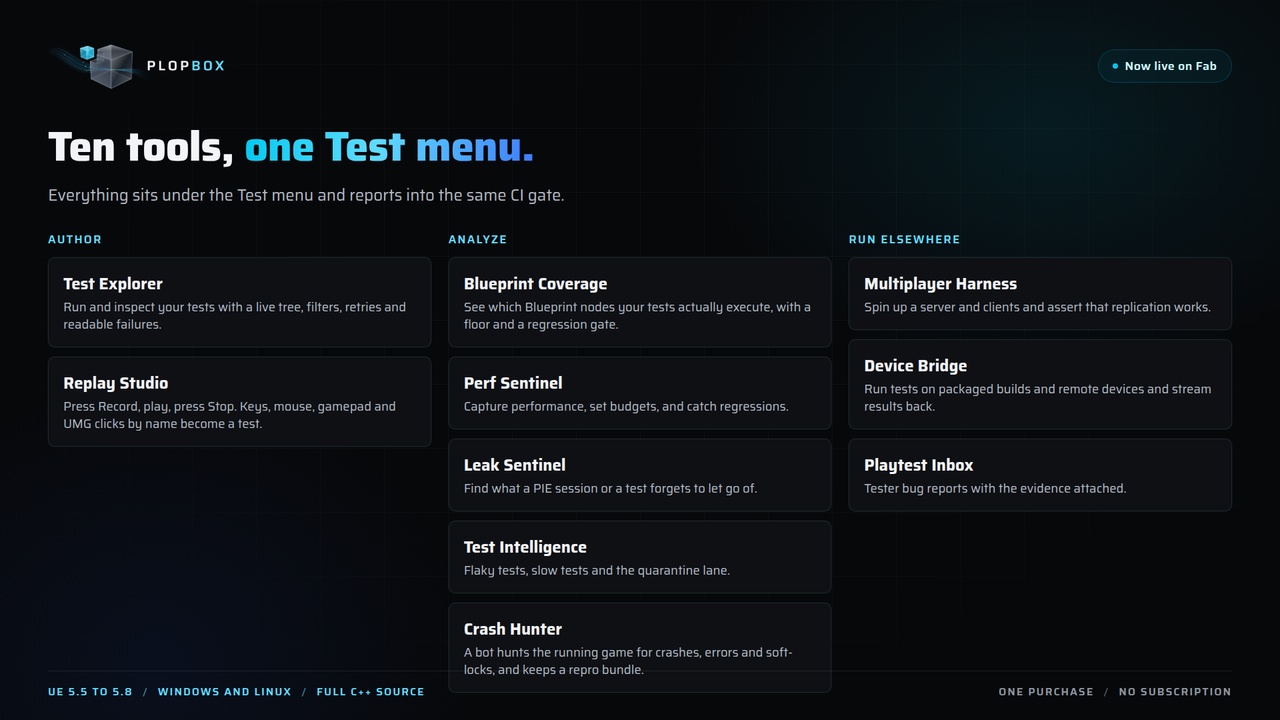
Unreal Test Kit (UTK) is one suite of Ten tools under a single Test menu, with full C++ source and no subscription.
One purchase, Full source, Yours to keep.
Support and updates:* This purchase covers UTK 5 for Unreal Engine 5. You get all UTK 5 releases
(fixes, compatibility updates, improvements) and security updates for at least 5 years from purchase.
UTK 6 for Unreal Engine 6 will be a separate product, with a free upgrade if you bought in the 6 months
before its launch. Full policy: plopbox.io/support-policy
Key features:
Replay Studio: press Record, play your game, press Stop. You now have a test, with no code written. Keys with their modifiers, mouse buttons, the wheel, gamepad axes, committed text, and UMG clicks by name all land in one stream, and a click is recorded as "the PlayButton" rather than a
screen coordinate the next layout change would invalidate. Checkpoints are the assertions: each captures a baseline while recording and compares the live frame on replay, within a tolerance. Playback runs at any speed from 0.1x to 10x, adjustable while it runs.
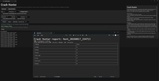
Crash Hunter: an autonomous bot that plays your game the way a person does. It commits to whole behaviours, walking somewhere, diving into a menu and backing out, fighting, working an interact prompt, and pausing to let transitions finish, at a believable pace with real key chords and held
inputs. It catches crashes, asserts, errors, soft-locks, and hangs, and saves every finding as a replayable repro bundle trimmed to the action that caused it, so you fix the cause instead of chasing a ghost. Coverage guidance pushes it toward ground it has not covered yet, and campaign mode runs many seeds in one pass and tells you exactly which ones failed. Point it at a Replay Studio recording and it drives your route first, then fuzzes from wherever that left the game, which is how a hunt reaches a state random input never would.
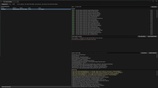
Blueprint Coverage: which Blueprint nodes your tests actually execute, as a node heatmap, a percentage in every report, a minimum-coverage gate, and a never-executed list that is the half you can act on. It reads the Blueprint debugger's own trace points, so there is no experimental profiler
to enable.
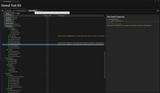
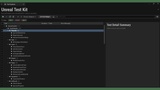
Test Explorer: a clean in-editor test runner with a multi-level test tree. Find and click UMG widgets by name, write assertions that read like sentences, catch visual and screenshot regressions, and get headless JUnit and JSON reports for CI.
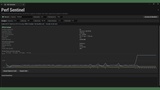
Perf Sentinel: frame-time and memory budgets, baselines, and regression gating with trend charts. One call gates your CI, so a performance regression fails the build before it ships, not after a player notices.
Leak Sentinel: per-class object and memory growth between two moments, with budgets, an allow list, and a cycle mode that tells a real leak from a cache filling once.
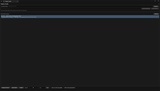
Test Intelligence: run history, flakiness scoring, a quarantine lane, slowest-test analytics, and impact-based selection that runs only the tests a change can affect. A test that fails every time is reported as broken rather than flaky, because the two need different responses, and a quarantined
test still runs and still reports, it just does not gate the build.
Multiplayer Test Harness: a dedicated server and N clients launched as real processes, with per-instance packet lag and loss, cross-instance divergence detection, and a desync report. Server authority arbitrates, not majority vote. Four scenarios ship as presets, including one bad client,
because a real match is not four players on identical connections.
Device Bridge: run the whole suite and Crash Hunter hunts on a packaged build or a second machine over your LAN, and stream results, logs, and repro bundles back into the editor. A headless gate runs the same suite on real hardware in CI.
Playtest Inbox: your testers file reports from inside the game as bundles carrying the screenshot, the log tail, and the build and machine details nobody fills in correctly by hand, delivered to a folder, your own endpoint, or a Discord webhook. No hosted service; the data stays on
your infrastructure.
CI you own: copy-paste pipeline templates for GitHub Actions, Jenkins, GitLab, Azure, and TeamCity. Run the whole suite headless in the pipeline you already have.
How it works:
Drop the plugin into your project's Plugins folder and enable it. Everything appears under one Test menu.
Point Crash Hunter at your game and let the bot play with seeded input; it saves a replayable repro for every issue it finds.
Write and run tests in Test Explorer, and set frame-time and memory budgets in Perf Sentinel against a known-good baseline.
Send the suite to a packaged build or a second machine with Device Bridge, or wire it into CI with a template; the build fails on a crash, a failed test, or a performance regression before it ships.
Who it's for:
Unreal teams running CI/CD who want crashes, test failures, and performance regressions caught before players see them. Studios that would rather own their tooling than rent a monthly crash-reporting service.
Designers and Blueprint-first developers who want to author a test by playing the game rather than by
writing C++.
QA and automation engineers who want a clean in-editor test runner with real UMG helpers.
Multiplayer teams who need replication tested under real packet loss, not on a perfect LAN.
Compatibility: Unreal Engine 5.5, 5.6, 5.7, and 5.8 (Windows and Linux). Full C++ source, free updates, one-time purchase, no subscription. Built-in Enhanced Input is the only dependency.