Opis
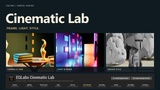
One window for your whole cinematic pipeline: shoot, light, grade, style, direct, record, render and hand off.
The 10-tab cinematic cockpit for Unreal: real camera presets, 143 camera effects, NPR looks, MRQ and NLE hand-off.
Documentation
Cinematic Lab is one window for your entire cinematic pipeline.
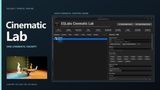
One window that replaces Sequencer, Outliner and Details-tab juggling: camera body and lens presets, lighting rigs, a full colour grade, 143 stackable camera effects, real-time NPR styling, a virtual-camera director, shot tracking, gameplay capture, Movie Render Queue with multi-pass EXR, and OTIO / EDL / FCP-XML hand-off.
The ten tabs
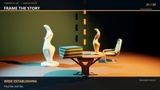
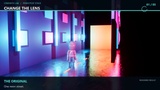
🎥 Camera — Spawn, pilot and eject cine cameras from a folder tree. A one-click installer adds 15 cinema camera bodies and 25 real-world lenses from manufacturers including ARRI, RED, Sony, Canon, Blackmagic, Zeiss, Cooke, Atlas and Angénieux, with their real sensor and optics specs: pick a body and a lens and the camera sets itself up. You also get fifteen one-click focal lengths from 14 to 200 mm, focus tracking, anamorphic squeeze, shot-framing presets (wide, medium, close-up, extreme close-up, Dutch, over-the-shoulder), composition guides, focus peaking and exposure zebras, four handheld operator profiles, dolly and crane moves that bake into Sequencer, and bookmarks that save position and lens together.
💡 Lighting —One-click three-point lighting that frames to your character's size, multi-light cinematic rigs, and a full Light Painter for painting lights into the scene by brush, line, grid or spline, with an IES gallery and batch editing. Set intensity, colour and Kelvin temperature, convert between light types, and save presets.
🎨 Post — Author post-process volumes in ten grouped sections, from bloom and exposure to Lumen, depth of field, white balance and a full colour grade, and save a complete look as a preset.
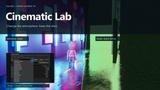
🌈 Prism — 143 camera effects you stack, weight and reorder on a volume or a piloted camera, plus 14 ready-made Looks built from them. A keyable master lets a Level Sequence fade a whole look in or out over a shot.
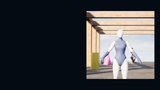
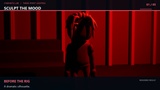
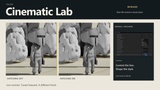
🖌 Style — The EQLabs Mirage non-photoreal renderer: 16 looks including anime, manga, comic book, ink, pencil, watercolor, oil painting, pop art, pixel art and noir, applied to the whole scene with one click. Fade them with a keyable master, keep chosen meshes or the sky photoreal, and render them through Movie Render Queue.
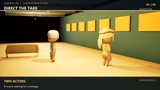
🎯 Director — Virtual cameras that aim at, follow or orbit a subject and blend by priority. Generate a six-angle coverage set from one or two actors, and let the Auto-Director cut between cameras in play, either when a subject is blocked from view or on a timed cycle. It runs at play time and in packaged builds.
🎬 Shots — A production shot list from your Level Sequences, with status, artist and version per shot, bulk re-timing and one-click single-shot renders. Record takes, circle the good ones, compare two takes and list what changed. Each shot can remember its whole look (lighting, style and camera) and restore it in one undoable step.
⏺ Recording — High-res screenshots at any aspect ratio, a replay buffer on hotkeys, and merging into MP4 (H.264 or H.265), WebM, ProRes MOV or GIF with your own ffmpeg. A Gameplay Recorder actor also captures in play and in packaged builds, with optional audio.
🎞 Render — Movie Render Queue presets (Marketing 1080p, Animatic 720p, Hero 4K Path-Traced, Vertical 9:16, Multi-Layer EXR), queue management with per-job progress, burn-ins, OCIO display transforms with a parity check that measures colour difference between your viewport and a reference frame, per-shot renders that restore each shot's Look first, a one-click dailies pass (every shot at review quality, encoded to mp4, plus a
contact sheet), and multi-pass AOV output to multi-layer EXR, with a preflight that tells you what will go wrong before you spend the GPU hours.
🔗 NLE Bridge — Hand off to editorial as OTIO, EDL (CMX 3600) or Final Cut 7 XML, with circled takes carried across as markers. Write a Nuke script set up for your render layers, import .cube LUTs with a folder watcher for round-tripping grades from Resolve, and switch to an ACES working space.
🤖 AI Enhance — Detect and configure the real-time upscaler (TSR, DLSS, FSR, XeSS) and the path tracer's denoiser, and hand renders off to Topaz Video AI, Real-ESRGAN or RIFE if you have them installed.
▸ Why it's different
• One cockpit instead of a dozen menus: every cinematic task opens from one launcher window.
• Real camera data: 15 bodies and 25 lenses from manufacturer specs, not generic placeholders.
• Effects and stylization built in: 143 Prism effects and 16 Mirage looks, keyable and remembered per shot.
• A virtual camera director, not just cuts: follow, orbit and coverage cameras with an Auto-Director.
• Records in packaged games too: the Gameplay Recorder works outside the editor.
• Ready for compositing: multi-layer EXR passes, ACES, OTIO, EDL, Final Cut XML and a Nuke script.
• Honest about its limits: the render preflight flags things that would fail silently, such as alpha off or a missing Cryptomatte plugin.
▸ Before you start
A few features need project settings: Custom Depth-Stencil, mesh distance fields, alpha in post-processing, and the deferred renderer for AOV passes. The launcher's Configure Project Settings button sets all four in one click; two of them take effect after an editor restart.
On first use, click Install Sample Presets in the launcher to add the camera bodies and lenses, and run the console command EQLabs.Prism.GenerateLibrary once per project to build the Prism effects. Virtual cameras follow and orbit during play, by design.
▸ Technical details
• Engine versions: UE 5.4, 5.5, 5.6, 5.7 and 5.8
• Modules: an editor module, a lighting-rig editor module, two runtime modules (virtual cameras and the gameplay recorder, and the Mirage renderer), and an editor-only test module
• Platform: Windows editor. The runtime modules package for your game.
• Plugin dependencies (all stock Unreal Engine, enabled automatically): Level Sequence Editor, Movie Render Pipeline, Enhanced Input, Takes, OpenColorIO
• Optional: Epic's Movie Render Queue Additional Render Passes plugin, for Object ID and Cryptomatte passes
• External tools you supply yourself, never bundled: ffmpeg for video merging; Topaz Video AI, Real-ESRGAN and RIFE for AI Enhance
• Includes its own automated test suite of 106 tests, editor-only
• Documentation and support: eqlabs.studio
══ FEATURE BULLETS (12) ══
• Ten tabs in one window: Camera, Lighting, Post, Style, Director, Shots, Recording, Render, NLE Bridge, AI Enhance
• 15 cinema camera bodies and 25 real lenses, installed in one click
• Three-point lighting, cinematic rigs and a full Light Painter
• Post-process authoring with a four-axis colour grade and saveable looks
• Prism: 143 stackable camera effects and 14 ready-made Looks
• Mirage: 16 non-photoreal looks, keyable and renderable through Movie Render Queue
• Virtual camera Director with coverage sets and an Auto-Director, at play time and in packaged builds
• Shot list with takes, circled takes, A/B compare and per-shot looks
• Replay buffer, ffmpeg merging and a Gameplay Recorder actor
• Five Movie Render Queue presets, OCIO, dailies and multi-layer EXR passes
• OTIO, EDL and Final Cut 7 XML export, Nuke scripts and live LUT import
• UE 5.4 to 5.8
Cinematic Lab is not currently part of EQLabs Pro. It will be included in the first quarter of 2027, which may affect the price of the EQLabs Pro plugin later.